Death on Demand? The Science, Ethics, and Future of Assisted Suicide Technologies
By Adithy S and Shirali Rajaneesh
Introduction:
The evolution and practices of end-of-life care and “the right to die” reflect the complexities of morality, dignity, and compassion.
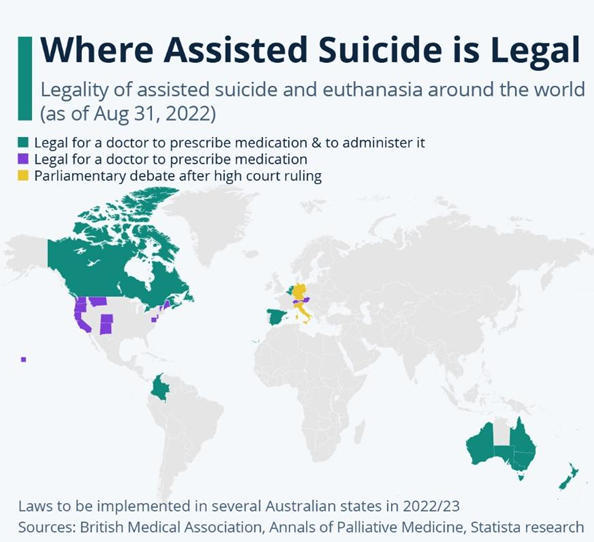
Fig 1. Global Representation of Legality In Assisted Suicide- 2022
Historically, societies have always grappled with legal and ethical considerations surrounding death, which has led to diverse beliefs and medical procedures. The discourse has only intensified in the past few decades, with a focus on assisted suicide, which refers to the practice of intentionally aiding individuals in ending their lives to reduce suffering. The progress of technology in this field has only served to strengthen this discussion.
One of the developments includes the creation of the Sarco Pod, created by Philip Nitschke, a 3D printed capsule that was designed to bring about a peaceful death by inert gas asphyxiation i.e., upon activation, the pod rapidly reduces oxygen levels by filling the capsule with nitrogen, leading to unconsciousness within minutes and death shortly thereafter. After its first use in 2024, it has become the centre of global debate and has even resulted in legal actions against facilitators for aiding and abetting suicide.
Moreover, research has revealed that drugs known as non-hallucinogenic psychedelics have been shown to minimize anxiety and depression without causing the extreme hallucinations (which are commonly linked to traditional psychedelics), and significantly help alleviate the despair related to end-of-life care. They have been the subject of debates regarding whether they truly mark a shift from the use of traditional psychedelics.
These technological innovations compel society to answer the questions: Is death a privilege or a right? Can machines morally decide on the end of life? With these innovations advancing, there is a need to ensure that the future of assisted suicide technologies aligns with moral values and honors human dignity.
Part 1: Groundbreaking Innovations
1. Suicide Pods (Sarco)
The Potential Role Of Technology In Euthanasia And Assisted Death

Fig 2. Sarco Pods – Exit International
How It Works
The Sarco pod, developed by Australian euthanasia advocate Philip Nitschke and Exit International, is a 3D-printed capsule that uses nitrogen gas to rapidly reduce oxygen levels, inducing unconsciousness within 60 seconds and death within 10 minutes. Users enter the pod, answer pre-programmed questions (e.g., confirming identity and intent), and activate the process autonomously, bypassing direct physician involvement. This design aims to "de-medicalize" death, granting individuals full control over their final moments.
Current Research
Sarco's deployment in Switzerland has sparked legal controversies, particularly around "death tourism" and the ethics of machine-facilitated suicide. In 2024, Swiss authorities arrested facilitators of its first recorded use, highlighting tensions between technological autonomy and regulatory frameworks. Meanwhile, researchers at the University of Zurich are testing AI algorithms to assess mental capacity, aiming to replace psychiatric evaluations with unbiased, data-driven assessments. Critics argue that AI lacks the nuance to detect coercion or transient despair, risking premature deaths.
2. Non-Hallucinogenic Psychedelic Analogs
How It Works
Drugs like COMP360, a synthetic psilocybin analog, target serotonin receptors to alleviate existential distress without inducing hallucinations. By modulating the default mode network—a brain region linked to self-identity—these compounds reduce end-of-life anxiety and reframe perceptions of mortality.
Latest Updates
Phase II trials at Johns Hopkins (2023) demonstrated a 40% reduction in anxiety among terminal patients, though debates persist about whether removing hallucinations diminishes therapeutic efficacy. Critics, including researchers in Nature Neuroscience (2024), argue that "ego dissolution" (a hallucination-induced loss of self) is critical for lasting psychological shifts, questioning the value of non-hallucinogenic variants.
Part 2: The Intrigues of Suicide Pods
1. The Cool Factor
The fusion of neurochemistry, AI, and existential philosophy makes this topic uniquely compelling. Technologies like Sarco and psychedelic analogs force us to confront fundamental questions: Is death a right or a privilege? Can machines ethically arbitrate life’s end? Nitschke’s vision of "democratizing death" challenges societal norms, blending transhumanist ideals with raw ethical dilemmas.
2. Applications & Use Cases
• Terminally Ill Patients: Sarco offers autonomy to those seeking to avoid prolonged suffering, while psychedelics address the psychological torment of mortality.
• Mental Health: Non-hallucinogenic drugs could treat suicidal ideation without the risks of intense psychedelic experiences, though their efficacy remains contested.
• Ethical Precedent: These innovations risk normalizing death as a consumer choice, particularly for non-terminal individuals. For example, Nitschke reports cases of elderly users seeking Sarco solely to avoid aging, raising concerns about societal pressure on vulnerable populations.
Part 3: Limitations and Future Directions
As the technology for assisted suicide evolves, it brings with it complex arguments about ethics, accessibility, and societal impact. While innovations like the Sarco Pod and non-hallucinogenic psychedelics open up new possibilities for end-of-life care, they also present significant challenges, such as:
- Ethical Concerns: Technologies like the Sarco Pod risk trivializing life, and non-hallucinogenic psychedelics are faulted for the ability to ruin therapeutic potential.
- Regulatory Failures: The international absence of guidelines leads to threats like "death tourism" and uneven regulation.
- Therapeutic Ambiguity: Removing hallucinations from psychedelics may cut short their potential, and long-term implications are insufficiently studied.
- Accessibility Issues: Technical and funding challenges restrict access, perpetuating health inequalities.
Future Directions
As these technologies advance, ensuring they align with human dignity and ethical standards becomes crucial. This can be done by:
- Enhanced Regulations: Develop global guidelines to govern ethical concerns and prevent misuse.
- AI Safeguards: Advanced AI algorithms used for psychological evaluations so that they can identify coercion and nuanced emotional cues.
- Public Education: Encourage culturally sensitive communication and educate the public regarding such drugs.
- Enhanced Therapies: Use non-hallucinogenic psychedelics along with traditional care to enhance dying care.
- Long-Term Research: Research societal, psychological, and ethical impacts of these innovations.
Conclusion
The emergence of assisted suicide technology, such as the Sarco Pod and non-hallucinogenic psychedelics, demonstrate how technology, ethics, and human dignity converge in end-of-life care. As they give terminal patients autonomy and emotional relief, they also pose existential ethical and regulatory challenges. The controversies around these technologies puts emphasis on the necessity of equitable measures that ensure safeguards against exploitation, foster reasonable access, and recognize the sensitivity of individual freedom and public responsibility. In the future, effective legislation, proper investigation, and open discourse will be needed to navigate this emerging world with empathy and honesty.
References
1. Exit International. (2023). Sarco Pod: Technical Specifications.
2. Yaden DB, Nayak SM, Gukasyan N, Anderson BT, Griffiths RR. The Potential of Psychedelics for End of Life and Palliative Care. Curr Top Behav Neurosci. 2022;56:169-184. doi: 10.1007/7854_2021_278. PMID: 34958455.
3. van Kolfschooten, H. The prospects of using AI in euthanasia and physician-assisted suicide: a legal exploration. AI Ethics (2024). https://doi.org/10.1007/s43681-024-00491-w
4. Campbell, C. S. (2019). Mortal responsibilities: Bioethics and medical-assisted dying. The Yale Journal of Biology and Medicine, 92(4), 733.
5. Nitschke, P. (2024). The doctor behind the suicide pod wants AI to assist at the end of life. WIRED.
6. Bravata, D. M., Watts, S. A., Keefer, A. L., Madhusudhan, D. K., Taylor, K. T., Clark, D. M., ... & Hagg, H. K. (2020). Prevalence, predictors, and treatment of impostor syndrome: a systematic review. Journal of general internal medicine, 35, 1252-1275.
7. Griffiths, R. R., Johnson, M. W., Carducci, M. A., Umbricht, A., Richards, W. A., Richards, B. D., ... & Klinedinst, M. A. (2016). Psilocybin produces substantial and sustained decreases in depression and anxiety in patients with life-threatening cancer: A randomized double-blind trial. Journal of psychopharmacology, 30(12), 1181-1197.
8. Gorsuch, N. M. (2009). The future of assisted suicide and euthanasia. In The Future of Assisted Suicide and Euthanasia. Princeton University Press.
9. Heaven, W. D. (2022, October 13). The messy morality of letting AI make life-and-death decisions. MIT Technology Review. Retrieved from https://ramaonhealthcare.com/the-messy-morality-of-letting-ai-make-life-and-death-decisions/
10. Kochan, P. (2021). Omicron, Sarcopod, controversial topics, transplants and new technologies. World J Med Images Videos Cases, 7, e83-90. https://wjomi.com/editorial14.pdf
11. https://www.statista.com/chart/28133/assisted-dying-world-map/