REACH FOR THE ASTEROIDS: THE PROMISE AND POTENTIAL OF ASTEROID MINING
By Hafsa Ariba and Vijayalakshmi Gunaga
Introduction:
Asteroid mining has been a topic of interest since the late 1960s, and as of late has become more relevant due to technological advancements and the growing scarcity of important resources on Earth. A recent headline noted that a 500-meter-wide platinum-rich asteroid could contain nearly 175 times the annual global platinum output. Now this obviously comes across as unrealistic, but it definitely got people talking.
If we were to gain access to new, vast sources, a lot of industry applications would become easier, more accessible. Society will also benefit from new capabilities arising from increased access to previously rare materials.
Extracting resources from asteroids could sufficiently alleviate the pressure on terrestrial sources and effectively stabilize supply chains. Furthermore, this could substantially support multiple industries reliant on them.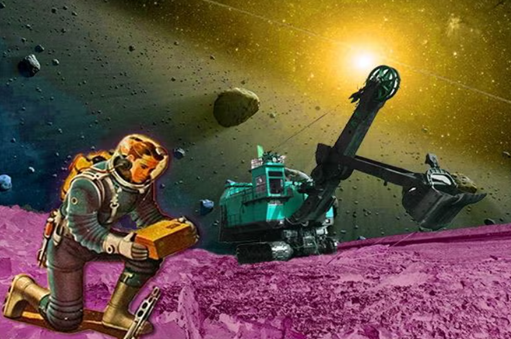

Though asteroid mining seems economically tantalizing, it comes with challenges of its own. We need to select the right asteroid, use fuel efficiently, and handle the issues caused by microgravity.
Selection: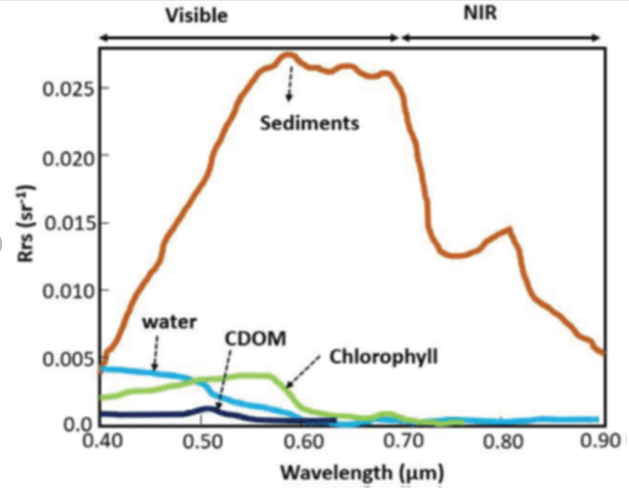
 Asteroids have no light of their own and instead reflect the light of the nearest star. The light that they reflect is captured and separated into its components to get a spectrum. Telescopic Reflective Spectroscopy uses this spectrum to study them from afar.
To identify whether the asteroid has our resources of interest, specific Infrared Spectral Signatures are studied. For instance, in the region between 4 and 7 µm, molecular water shows characteristic absorption bands. This region is therefore one of special interest.
Efficient Use of Fuel:
Solar sails have been proposed as a solution to reduce fuel costs and to ensure minimal damage to the environment.
How do they work? Photons can transfer their momentum upon collision. The more reflective a surface, the higher the efficiency. If the object is lightweight, it can even be used to propel.
They have been in use for quite a while, with The NASA Advanced Composite Solar Sail System (ACS3) being one of the most recent projects. It uses a quadratic 860 sq. ft sail made of polyethylene naphthalate.
As far as the mining itself is concerned, solar energy could be used to run the operations. Solar energy would work much better on the asteroid due to the absence of the Earth’s atmosphere.
Microgravity:
A surface that is being drilled will exert a response to the drilling. This normal force is known as Weight On Bit (WOB) and it is one of the most fundamental parameters of drilling. The Earth’s gravity makes this possible. 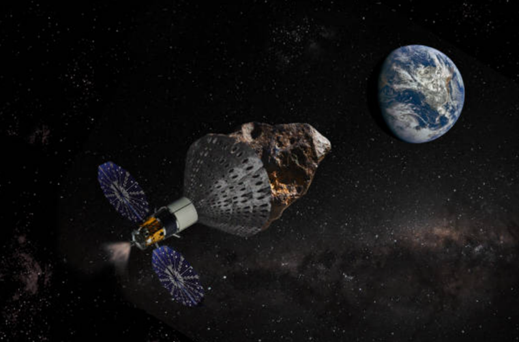

Due to the lack of gravity on an asteroid, even a small value of WOB will not be supported. Anybody who attempts to drill the surface will be sent flying into space due to the normal reaction.
This issue requires some mechanism that can support the WOB.
Anchors that work in tandem with linear translation mechanisms have been proposed as solutions.
Simulation Systems:
Excavation methodologies based in outer space deal with issues which include working in a vacuum at subzero temperatures. For this reason, space environment simulation systems are used.
Pumps (cryogenic, diffusion etc) are used to establish a vacuum, and the subzero temperatures are obtained by evaporating liquid hydrogen or helium. For example, the LunarVader simulator supports drilling and sampling tests under simulated lunar or Martian conditions, with a low temperature of −80 °C and a vacuum of 852 Pa [5].
Overheating:
One of the main concerns is the mechanism for heat dissipation. The lack of an atmosphere in space eliminates convective heat transfer, which can cause the drill bits to get damaged.
Plasma drills and Thermal probes are being investigated to resolve these issues.

Implications:
Economic Implications:
For the time being, asteroid mining has a very high price tag, and those that have attempted to fund it have failed.
However, this does not seem to deter others due to the extremely valuable resources available.
In the words of astrophysicist Neil deGrasse Tyson, "The first trillionaire there will ever be is the person who exploits the natural resources on asteroids."
If asteroid mining were to succeed, the global devaluation of Earth's raw material (currently valued at US $660 B) would begin. This could potentially lead to a struggle to capture the new market.
This could cause mining on Earth to become redundant and the industry as a whole would suffer, particularly countries who rely on export of raw natural resources.
Environmental Implications:
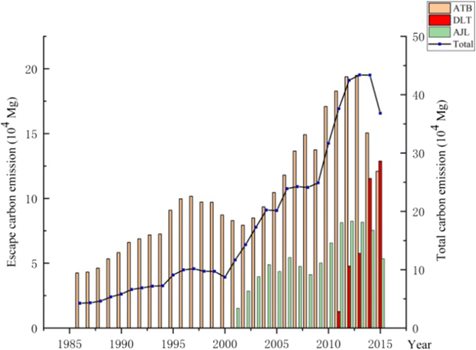
The mining industry has always been notorious for its massive contribution to the world’s carbon emissions and the damage dealt to the ecosystem in its wake.
Moving the entire industry would definitely be a boon for the Earth’s environment, as large swathes of land would free up and be allowed to recover from the constant exploitation.
Limitations and possible solutions
While this is a completely speculative idea at this point, it is technologically feasible and a significant amount of research and investment is currently taking place. While no commercial asteroid mining operations are active yet, several missions and companies have made progress toward making it a reality.
The limitations of this mining method include:
- Microgravity: In the microgravity of space, traditional methods of mining simply do not work. Mining, drilling, and processing operations will require technologies other than those presently available.
- Automation and Robotics: Mining operations will rely heavily on autonomous robots, but current robotics technology is not yet advanced enough to perform complex tasks in unpredictable asteroid conditions.
- Material Transport: Getting mined resources back to Earth safely poses a huge logistical challenge due to the vast distances involved and the high energy costs required.
- Asteroid Selection: Identifying suitable asteroids for mining is difficult, as only a small percentage are rich in valuable materials and reachable.
Possible solutions that address these limitations are:
-
Solar-powered machinery: For an asteroid in constant sunshine, use solar panels to power mining and processing equipment. This makes operations more sustainable.
-
3D Printing: Local generation of the equipment needed for mining and building can dispense with the need to ferry goods from Earth and so bring down mission costs.
-
Robotic Technology: Robots capable of drilling, breaking and extracting precious metals such as platinum from asteroids could work autonomously.
-
Mobility and Anchoring:
In microgravity, both machinery and astronauts will require grappling systems to attach themselves to the asteroid. At the same time these very same low gravity conditions help mined materials move with a minimal effort.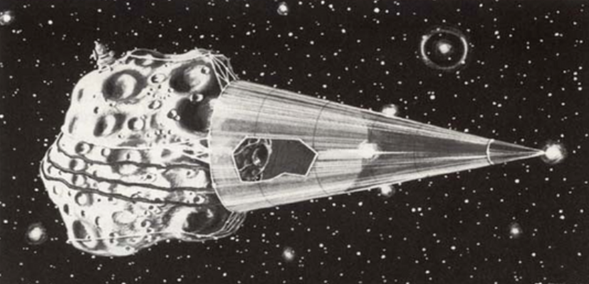

Conclusion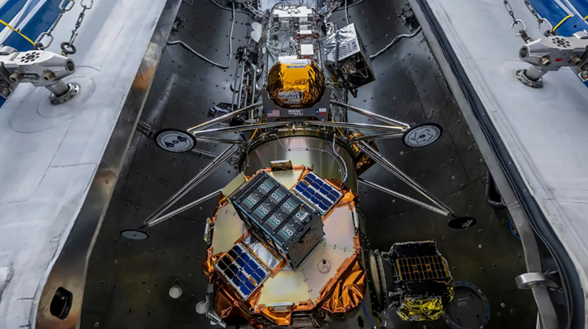

Although asteroid mining is not operational yet, the latest advancements in robotics, space exploration and resource extraction indicate that commercial asteroid mining could soon be possible. Researchers predict that successful asteroid mining could revolutionize industries by providing rare metals and supporting deep-space exploration. Companies like AstroForge are actively developing technologies to process asteroid materials, aiming to become pioneers in commercial asteroid mining.
Asteroids also contain water, which can be used as rocket propellant, enabling missions to the outer planets of the solar system and minimizing our dependency on Earth for sustainable resources. Asteroid mining is also a very lucrative field, offering both economic and scientific benefits beyond resource acquisition. That could form an entirely new trillion-dollar industry, as it would reduce the expense of space exploration by offering building blocks and fuel for in-space construction. This method also embraces sustainability of resource utilization and fosters innovations arising from robotics and space technologies. Furthermore, studying asteroid compositions can deepen our understanding of the solar system’s formation and the origins of life, making asteroid mining a critical step toward advancing both scientific knowledge and future space endeavours.
References
-
Valeska Arendt et al (2022), The global environmental costs of mining and processing abiotic raw materials and their geographic distribution, Journal of Cleaner Production, doi: 10.1016/j.jclepro.2022.132232
-
Ríos Muñoz, F., Peña Ramírez, C., Meza, J. et al. Platinum Group Metals Extraction from Asteroids vs Earth: An Overview of the Industrial Ecosystems, Technologies and Risks. Miner Econ 37, 681–700 (2024).
https://link.springer.com/article/10.1007/s13563-024-00429-y -
Nelson, M. & Britt, Daniel & Lebofsky, Larry. (1993). Review of asteroid compositions. Resources of near-earth space.
https://www.researchgate.net/publication/253802155_Review_of_asteroid_compositions -
Peter J. Schubert, Economical extraction of platinum from main belt asteroids, Advances in Space Research, 2025, ISSN 0273-1177
https://www.sciencedirect.com/science/article/abs/pii/S0273117725001553 -
https://web.mit.edu/12.000/www/m2016/finalwebsite/solutions/asteroids.html
-
Welch C, Yi S, Lasslop A. 2010. Asteroid mining technologies roadmap and applications (ASTRA). International Space University Space Studies Program 2010 Graffenstaden-France.
-
Hamm, M., Grott, M., Senshu, H. et al. Mid-infrared emissivity of partially dehydrated asteroid (162173) Ryugu shows strong signs of aqueous alteration. Nat Commun 13, 364 (2022).
https://doi.org/10.1038/s41467-022-28051-y -
Aryan Bardeja, "Exploring the Scope of Solar Power for Asteroid Mining and Resource Collection Missions", International Journal of Science and Research (IJSR), Volume 13 Issue 9, September 2024, pp. 1008-1011, https://www.ijsr.net/getabstract.php?paperid=SR24917001326, DOI: https://www.doi.org/10.21275/SR24917001326
-
https://www.techbriefs.com/component/content/article/16782-npo-48316
-
Peineng Zhong, Lusi Wang, Guangfei Zhang, Xiayu Li, Jinchang Xu, Qichen Sun, Suping Wang, Suolai Zhang, Chu Wang, Lei Chen, Xu Yang, Kun Xu, Xilun Ding, Tao Zhang, Thermal-vacuum regolith environment simulator for drilling tests in lunar polar regions, Acta Astronautica, Volume 229, 2025, Pages 13-26 ISS 0094-5765, https://doi.org/10.1016/j.actaastro.2025.01.002.
https://www.sciencedirect.com/science/article/pii/S0094576525000049 -
https://www.bbc.com/future/article/20250320-how-close-are-we-really-to-mining-asteroids
-
Yang, B., Bai, Z. & Zhang, J. Environmental impact of mining-associated carbon emissions and analysis of cleaner production strategies in China. Environ Sci Pollut Res 28, 13649–13659 (2021). https://doi.org/10.1007/s11356-020-11551-z
-
Pisanti, A. & Magrì, Stefania & Ferrando, Ilaria & Federici, Bianca. (2022). SEA WATER TURBIDITY ANALYSIS FROM SENTINEL-2 IMAGES: ATMOSPHERIC CORRECTION AND BANDS CORRELATION. The International Archives of the Photogrammetry, Remote Sensing and Spatial Information Sciences. XLVIII-4/W1-2022. 371-378. 10.5194/isprs-archives-XLVIII-4-W1-2022-371-2022.